
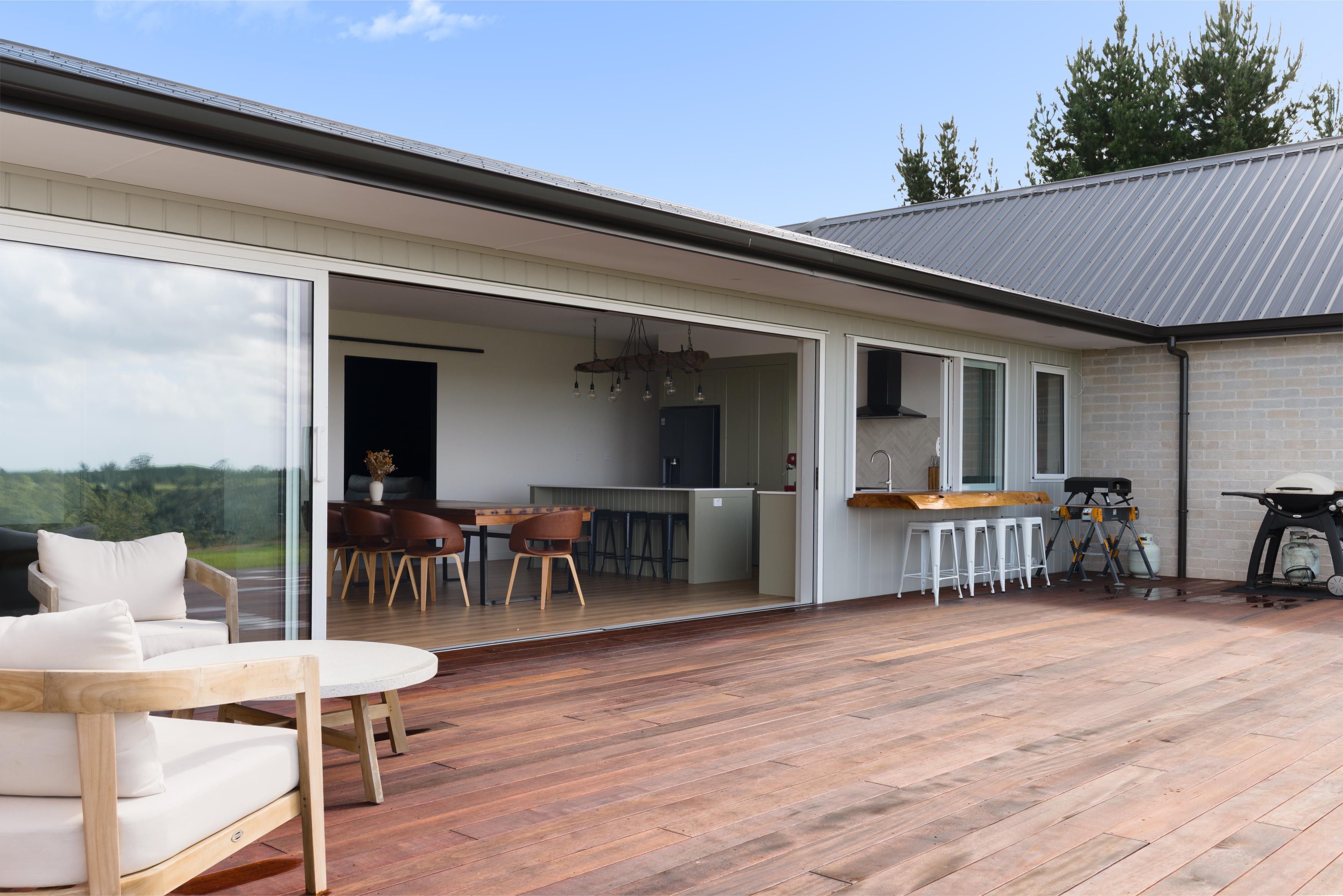
How Much Does a Home Addition or Extension Cost in Bay of Plenty and Christchurch?

A home addition or extension in Bay of Plenty or Christchurch can vary widely in cost depending on the size of the build, whether it is single-storey or second-storey, how complex the design is, what has to happen to the existing house, and what your site requires before construction starts. As a general guide, we find that quality single-storey extensions typically range from $3,000-$5,000 per square metre, while second-storey additions typically range from $5,000-$7,000 per square metre. The real cost of your project will depend on your site, scope, finishes, consent pathway, and how much structural work is needed to tie the new space into the existing home.
 
That is why homeowners who get the best outcome usually start with early planning instead of relying on one rough number. A home extension can be one of the smartest ways to create more space without leaving the area you love, but the strongest decisions are made when you understand not just the price range, but the cost drivers behind it.
 
At Diack Homes, we work with homeowners across Tauranga and the Bay of Plenty to help them understand what is practical, what is likely to add the most value, and what needs to be resolved before moving into design, consent, and construction. If you are still weighing up your options, it can also help to compare this guide with our pages on full home renovations, custom homes, and knockdown rebuilds. For homeowners comparing Bay of Plenty and Christchurch projects, the same principle applies: extensions are priced by complexity, not by a shortcut average.

What does a home addition or extension cost in Bay of Plenty and Christchurch?

As a general guide, we find that quality single-storey extensions in the Bay of Plenty typically range from $3,000-$5,000 per square metre, while second-storey additions typically range from $5,000-$7,000 per square metre. Those figures are useful as a starting point, but they are not a substitute for project-specific planning.
 
Two extensions can look similar on paper and still land in very different cost brackets once real conditions are considered. A straightforward ground-floor room addition on a flat site is very different from a second-storey extension, a project with difficult access, or a home that needs significant plumbing, drainage, or structural upgrades before the extension can even begin.
 
Here is a simple comparison table based on the figures we use as a general guide for this type of work:
Extension type
Typical range published by Diack Homes
What usually influences the final cost most
Single-storey extension
$3,000-$5,000 per m²
Site access, foundations, roof integration, wet areas, finishes
Second-storey addition
$5,000-$7,000 per m²
Structural strengthening, stairs, upper-level services, complexity of tying into existing home
A more useful way to think about cost is to break the project into layers:
  • planning and feasibility
  • design and documentation
  • engineering and compliance
  • demolition or prep work
  • structural construction
  • roofing and exterior envelope
  • plumbing, electrical, and other services
  • interior fit-out and finishes
  • landscaping, access, and final integration with the existing home
 
If you want a realistic answer, you need to understand which of those layers apply to your project and how complex each one is likely to be.

Want an Instant Online Estimate?

What types of home additions and extensions do homeowners usually consider?

Homeowners in Bay of Plenty and Christchurch usually start thinking about an extension when their house no longer fits the way they live, but they still want to stay where they are. That often leads to one of a few common project types.


Extra bedroom additions

A new bedroom is one of the most common reasons people extend. Sometimes that means a simple extra room for a growing family. Other times it becomes a larger project because the new bedroom also needs wardrobe storage, better flow, or upgraded bathrooms nearby.


Master suite extensions

A master suite addition often includes a bedroom, ensuite, and wardrobe. This tends to be more complex than a plain room addition because it introduces plumbing, waterproofing, ventilation, and a higher finish expectation.
 

Kitchen and living room extensions

Many homeowners want to open up the back of the house and create a larger kitchen, dining, and living area. These projects can transform the way a home feels, but they often involve structural changes, altered rooflines, new openings, and careful integration with outdoor spaces.
 

Multi-room family extensions

Some extensions combine several needs at once, such as another bedroom, bathroom, office, and expanded living zone. These projects can make far more sense than moving, but they also need stronger upfront planning because so many decisions are interconnected.
 

Second-storey additions

If site coverage is tight or outdoor space is worth protecting, building up may be the better option. A second-storey addition can unlock views, privacy, and extra floor area, but it usually comes with more structural complexity than a single-storey extension.
 

Home office or flexible-use spaces

As more people work from home or need spaces that can adapt over time, dedicated offices, studios, and multipurpose rooms have become more common. Even these smaller extensions still need the same disciplined thinking around access, light, services, and integration with the existing home.

What affects the cost of a home extension most?

The cost of an extension is shaped by far more than floor area. Homeowners who understand the main cost drivers early usually make better decisions and avoid expensive redesigns later.
 

The size of the extension

A larger extension generally costs more, but not simply because there is more floor area. A bigger project often means more structure, more roofing, more lining, more services, and more decision-making. It also increases the number of places where new work must meet the old house cleanly.
 

The complexity of the design

Simple shapes, straightforward rooflines, and efficient layouts are usually easier to build than highly customised designs. Once a project involves unusual forms, custom detailing, difficult junctions, or lots of glazing, costs usually rise because the build becomes less straightforward.
 

Structural work to the existing house

One of the biggest hidden drivers is what has to happen to the current home so the extension works properly. Removing walls, installing beams, strengthening parts of the house, adjusting roof structures, or upgrading older framing can all change the budget significantly.
 

Plumbing and wet areas

If your extension includes a bathroom, ensuite, laundry, or kitchen changes, it becomes more complex because plumbing, drainage, waterproofing, and ventilation all need to be considered. Wet areas usually require more coordination than dry spaces.
 

Site conditions and access

A flat, accessible site is very different from a sloping block, a tightly constrained urban section, or a site where materials are hard to move. In places like Papamoa and other coastal parts of the Bay of Plenty, site exposure, salt air, and weathertight detailing can all affect build methodology and product choices. Access affects labour efficiency, machinery options, site setup, and how disruptive the job may be while work is underway.
 

Integration with the existing home

The more important the extension is to the day-to-day flow of the house, the more carefully it has to be tied in. Matching floor levels, roof forms, cladding, windows, insulation expectations, and overall visual coherence all affect how much work is involved. On many projects, that can also mean upgrades around framing, moisture management, cavity details, and treated timber requirements such as H3.2 in the right applications.
 

Specification and finish level

Even where the footprint stays the same, the budget can change substantially depending on the choices made for joinery, flooring, lighting, cabinetry, bathroom fixtures, heating, and storage. The extension is not just a shell. It is a lived-in part of the home, and the level of finish matters.
 

Consent and compliance requirements

Some projects move through approvals more simply than others. Others require more documentation, more consultant input, or more detailed council coordination. These requirements can add time and cost even before construction begins.

What hidden costs catch homeowners out on extension projects?

Hidden costs are rarely truly hidden. More often, they are just the parts of the project homeowners have not yet been guided through in detail.
 
One of the most common issues is assuming that the extension itself is the whole project. In reality, a successful extension often includes a long list of supporting work around the extension.
 
Use this quick checklist when thinking about hidden costs:
  • concept development and design refinement
  • measured drawings or existing house documentation
  • engineering input
  • building consent documentation
  • site investigations
  • demolition and preparation work
  • drainage or services adjustments
  • remedial work uncovered during construction
  • matching or upgrading finishes in adjoining areas
  • final touch-ups where new and old meet
 
Homeowners are often surprised by the amount of work needed to make an extension feel seamless. The new room may be the visible result, but the project also has to solve transitions, circulation, weather-tightness, insulation continuity, and how the rest of the house functions after the work is complete.
 
Another overlooked cost is disruption. Even if you remain in the home during construction, there may still be temporary inconvenience around access, dust, noise, kitchens, bathrooms, or outdoor areas. Good planning reduces disruption, but it should always be part of the early conversation.

How long does a home extension usually take?

Our timeline guidance is straightforward. As a general guide, a small to medium extension typically takes 2-3 months, a larger extension typically takes 3-5 months, and a second-storey addition typically takes 4-6 months. The building consent process also typically takes 4-6 weeks through Tauranga City Council or other Bay of Plenty councils.
 
Here is that timing guidance in a cleaner format:
Project type


Typical build duration published by Diack Homes


Small to medium extension


2-3 months


Larger extension


3-5 months


Second-storey addition


4-6 months


Building consent process


4-6 weeks


These timelines are a practical guide, not a promise. Program length can still shift depending on design complexity, weather, access, material lead times, inspection scheduling, and whether homeowners continue living in the house during construction.

Is it better to extend, renovate, convert, or move?

That depends on what problem you are trying to solve.
 
If your main issue is lack of usable space and your current location still works for your family, extending can make strong sense. It lets you stay in the neighbourhood you know while reshaping the home around the life you actually live now.
 
If the house already has enough square area but the layout is inefficient, a renovation or reconfiguration may be the smarter option. In those cases, the issue may not be total size but the way existing rooms are used.
 
If there is underused space such as a garage or another adaptable part of the home, a conversion may offer a simpler path than a full extension. That said, conversions still need to be assessed properly because not every existing structure is suitable as-is.
 
Moving can look attractive on paper, especially if the current home has major limitations. But moving also comes with real friction: searching, negotiating, selling, buying, legal work, relocation stress, and the risk that the next house still requires compromise.
 
Here is a simple decision table:
Option


Usually best when


Key trade-off


Extend


You love the location and need more space


Requires planning, consent, and build disruption


Renovate/reconfigure


The issue is layout, not total size


May still uncover hidden work in the existing house


Convert existing space


There is underused space already available


Not every structure is suitable without upgrades


Move


The site or house has fundamental limitations


Higher transaction stress and less control over layout


This is exactly why feasibility matters. Before committing to an extension, it is worth testing whether extension, renovation, conversion, or moving is the strongest path.

Do you need design, permits, or council approvals before extending a home?

In most cases, yes. A home extension is not just a design question. It is also a compliance and buildability question.
 
Most substantial extensions will require proper design documentation and building consent. Depending on the property and the proposed work, there may also be planning, zoning, setback, site coverage, recession plane, or other council considerations that need to be checked early. In Tauranga and the Western Bay of Plenty, those early checks can save a lot of wasted design time.
 
That is why jumping straight to “how much per square metre?” is often the wrong starting point. Before you can price accurately, you need to understand what can actually be built on the site and what approval pathway the project is likely to follow. For Bay of Plenty homeowners, it is also worth reviewing the local building consent guidance from Western Bay of Plenty District Council.
 
This is part of the value of early planning. Instead of pushing straight into construction assumptions, we help homeowners understand the decision path first: what is possible, what may be constrained, what documentation is likely to be required, and how to avoid expensive surprises later.
 
A well-run extension project usually moves through a sequence like this:
  • initial conversation and site review
  • clarification of goals, priorities, and likely scope
  • concept planning
  • design refinement
  • compliance and consent preparation
  • fixed-price documentation and contract pathway
  • construction planning and delivery
 
When that sequence is followed properly, the budget conversation becomes much more grounded and much more useful.

How should homeowners budget properly for an extension?

The best way to budget for an extension is not to start with wishful thinking. It is to start with priorities.
 
Before talking to a builder, homeowners should be clear on:
  • what problem the extension needs to solve
  • which spaces are essential versus optional
  • whether lifestyle, resale value, or long-term flexibility is the main goal
  • how important finish level is to the outcome
  • whether living in the home during construction matters
 
Once those priorities are clear, the project can be shaped around them.
 
A good extension budget also needs room for realism. Even well-planned projects can uncover conditions in an older home that were not obvious at the start. That does not mean the project is failing. It means the planning process needs to be disciplined enough to identify and manage risk properly.
 
Homeowners also benefit from separating three different questions:
  • What do we want?
  • What is realistic on this site?
  • What version of this project makes the most sense financially?
 
Those are not always the same answer. The strongest projects usually come from aligning them early rather than forcing the build to carry unresolved decisions.

When does a home extension make financial sense?

A home extension makes financial sense when it improves the way you live and when the investment is tied to a realistic view of the property, the site, and your long-term plans.
 
For some families, the value is primarily lifestyle. They want more room, better flow, more privacy, or more functionality in a location they do not want to leave. For others, the extension is also about protecting or enhancing property value.
 
The key is not to think about “value” too narrowly. A well-planned extension can create:
  • a better match between house and household
  • stronger day-to-day functionality
  • improved indoor-outdoor living
  • better use of the site
  • better resale appeal if the design is well integrated
 
Where homeowners get into trouble is when they build space that does not solve the right problem, overdesign a project for the property, or commit to a layout that sounds good but performs poorly in real life.
 
That is another reason feasibility matters. It helps answer whether the proposed extension is likely to be sensible before too much money is spent on the wrong direction.

Why should you start with a feasibility study or preliminary planning?

Because a feasibility study or preliminary planning process is where the project becomes real.
 
Before that point, most homeowners are working with ideas, assumptions, and inspiration. Those can be useful, but they do not tell you what your site can support, how the extension should connect to the home, what level of complexity you are introducing, or whether a different approach would serve you better.
 
A good feasibility process helps you answer questions like:
  • Is the extension idea workable on this property?
  • Is the proposed scope aligned with the site and the house?
  • What are the likely complexity points?
  • What should be prioritised first in design?
  • What council or compliance issues should be assessed now, not later?
  • Is extending still the best option compared with renovating or reconfiguring?
 
This is where homeowners save time, money, and stress. Not because feasibility removes every unknown, but because it surfaces the important ones early while decisions are still flexible.
 
Our early-stage planning approach is designed to help homeowners move forward with more confidence. If you want to explore the broader process before speaking with us, you can also read our guides on planning custom home construction, custom home construction costs, and choosing a custom home builder. Instead of guessing from internet ranges, you can begin with a conversation grounded in your home, your site, and your priorities.

What does our process look like for an extension?

We position our extension service around a structured, consultative process rather than a rushed estimate. That matters because extensions are rarely successful when key decisions are skipped.
 
Our process typically includes:
  • initial consultation and site evaluation
  • concept design and compliance assessment
  • design refinement and visualisation
  • detailed fixed-price proposal and specifications
  • consent management
  • structured construction planning
  • progress updates through BuilderTrend
  • quality assurance and handover
 
That process is helpful for homeowners because it creates clarity. It makes the extension easier to understand as a staged project rather than one large unknown.
 
We also focus on several factors that matter strongly for extension projects in Tauranga and the wider Bay of Plenty:
  • local building knowledge
  • licensed building expertise
  • clear communication
  • structured project management
  • quality assurance
  • a focus on making extensions feel integrated with the original home
 
Those strengths matter whether the homeowner is still comparing options or already committed to creating more space.

Frequently asked questions about home additions and extensions

As a general guide, we find that quality single-storey extensions typically range from $3,000-$5,000 per square metre, while second-storey additions typically range from $5,000-$7,000 per square metre. The final price depends on the site, design complexity, structural work, services, and finish level.

A small to medium extension typically takes 2-3 months, a larger extension typically takes 3-5 months, and a second-storey addition typically takes 4-6 months, with 4-6 weeks typically needed for the consent process. Actual timing can still vary depending on approvals, weather, complexity, and build conditions.

Because extensions are highly site-specific. The cost is shaped by what needs to happen to the existing house, what kind of new space is being created, and how straightforward or complicated the build will be. A single figure without context often creates false confidence.

Sometimes yes, but it depends on the type of work being done and how much of the existing home is affected. This should be discussed early because living arrangements can influence project planning, sequencing, and overall disruption.

A feasibility study or early planning conversation. That is usually the point where homeowners move from vague ideas to a realistic understanding of what is possible, what is likely to drive cost, and what the most sensible project path looks like.

Why work with us on a home addition or extension?

A cost-related article should do more than explain numbers. It should help homeowners understand who they can trust to turn those numbers into a well-run project. That matters because extensions are rarely just about adding floor area. They involve structural integration, planning, consent coordination, pricing clarity, and a build process that has to work around an existing home.
 
We focus on custom homes, full renovations, and home additions and extensions across Tauranga and the Bay of Plenty. We also bring a fixed-price approach, local council knowledge, BuilderTrend progress tracking, Licensed Building Practitioner expertise, and a structured process from consultation through to handover. In the context of extension costs, that matters because homeowners are not simply buying more space. They are trying to avoid budget surprises, poor planning, and a final result that feels disconnected from the original house.
 
For homeowners researching extension costs, the value of working with us is not just getting a rough square metre rate. It is getting guidance on what is likely to drive the real cost of your project, what should be resolved before consent, and how to shape an extension that feels worth the investment once it is built.

Final thoughts: what should homeowners do next?

If you are running out of space but want to stay in the area you love, a home addition or extension could be the right move. But the real value comes from understanding the project properly before you commit to numbers, drawings, or construction assumptions.
 
The strongest extension projects start with clear goals, early assessment, and realistic planning. They are guided by what works for the site, what will integrate well with the existing house, and what will improve your day-to-day life long after the build is complete.
 
If you are considering a home extension in Tauranga or the Bay of Plenty, the best next step is to move beyond generic price ranges and get advice based on your actual property, your goals, and the level of complexity your project is likely to involve. Schedule a call with Diack Homes to talk through your ideas, understand what happens next in the feasibility and planning stage, and get clear on the real cost drivers before prices, timelines, and site constraints move further against you.

Reset password

Enter your email address and we will send you a link to change your password.

Powered by Estatik