
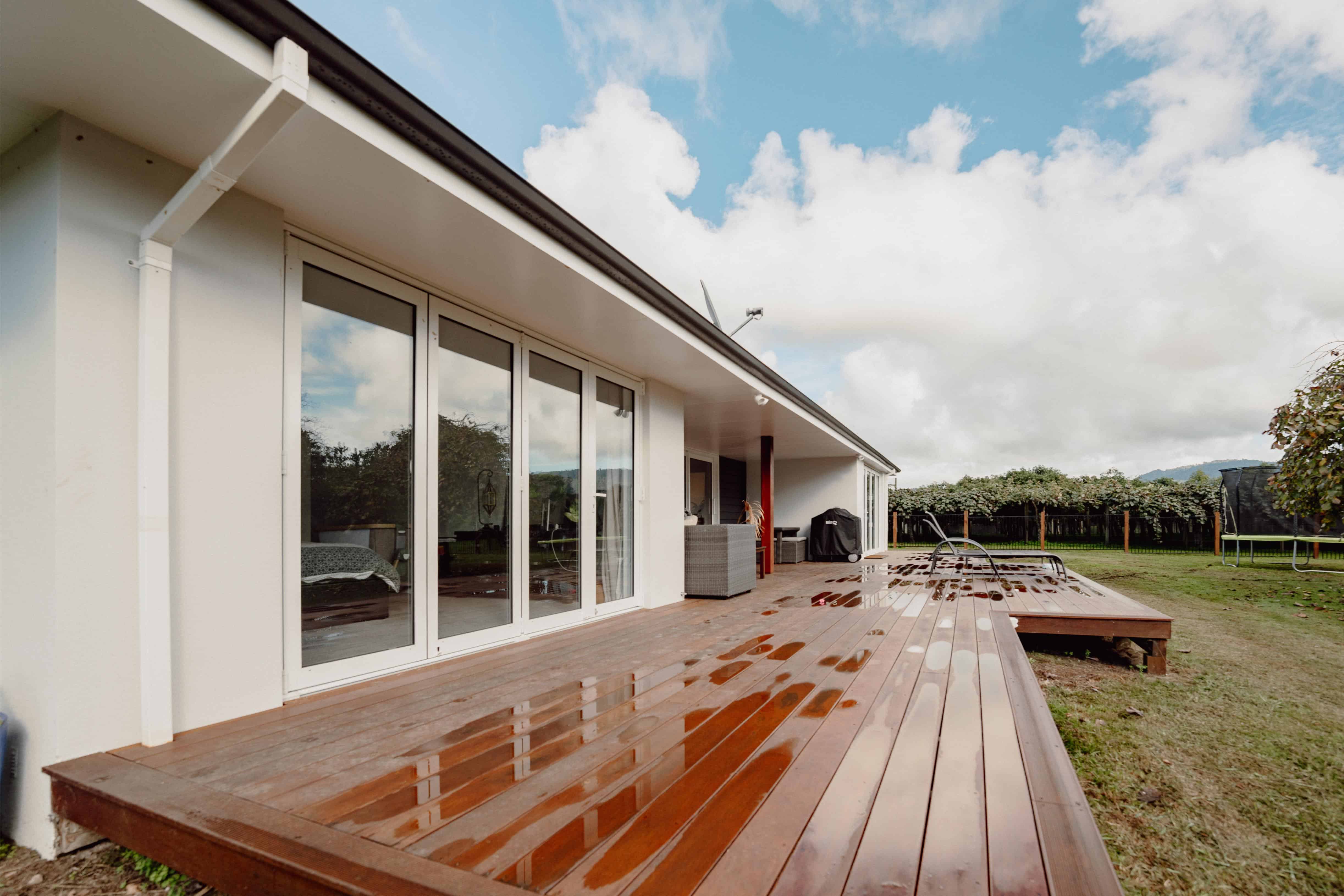
Today, a high-quality custom home in Tauranga typically lands between $3,500 and $5,500+ per square metre (incl. GST). However, this figure is a baseline. A 200sqm home on a flat section in Papamoa costs significantly less to build than the same design on a sloping site in the Kaimais. The real budget depends less on the average rate and more on site complexity, material selections, and the quality of your project management.
Navigating custom home construction costs is the most stressful part of the journey. You hear horror stories of price blowouts, “ghosting” builders, and unfinished projects. We wrote this guide to stop that from happening to you.
(For a complete overview of our building process from land purchase to handover, read our Ultimate Guide to Custom Homes in the Bay of Plenty).
Is It Cheaper To Renovate or Build New?
When analysing custom home construction costs, many homeowners ask if it is cheaper to renovate their current home or buy land and build new.
The answer depends on what you value more: location or performance.
The Hidden Costs of Renovation
Renovating often costs more per square metre than building new. This surprises many people. You might assume using the existing structure saves money. Often, it does the opposite.
Demolition and Asbestos
Stripping back a 1970s home in the Avenues, Otumoetai, or Mount Maunganui is labour-intensive. We often find asbestos in soffits, textured ceilings, or old cladding. Removing this requires specialist teams and strict containment. This eats into your budget before we hang a single sheet of gib.
“If you walk into a renovation project, look immediately at the fuse box if you see old ceramic rewirable fuses, budget $10,000–$15,000 immediately for a full house re-wire. Your insurance company likely won’t cover the home until it’s upgraded.”
Code Compliance Upgrades
New Zealand Building Code standards have changed drastically. When we touch an existing structure, we often trigger a requirement to bring other parts of the home up to current code.
- Structural Strengthening: Old framing might need expensive steel bracing to meet modern earthquake standards.
- Healthy Homes Standards: Existing insulation is likely compressed or missing. We often need to re-line entire walls to achieve compliance.
- Joinery Mismatches: Single-glazed timber joinery wastes heat. Replacing it to match a new extension involves extensive carpentry work on the surrounding cladding.
The 30% Contingency Rule
On a new build, we can calculate costs with high accuracy. On a renovation, we are opening up walls. We do not know what we will find—rot, borer, or dodgy plumbing from 1985. We recommend a 20% to 30% contingency fund for renovations. For new builds, a 5% to 10% contingency is usually sufficient.
Renovation vs. New Build Comparison
Use this table to decide which path fits your goals.
| Feature | Renovation | New Custom Build |
|---|---|---|
| Cost Certainty | Low (Hidden unknowns like rot/asbestos) | High (Fixed Price Contract) |
| Thermal Warmth | Medium (Hard to seal old frames) | High (New code insulation & glazing) |
| Timeline | Flexible/Uncertain | Predictable Schedule |
| Character | High (Established charm) | Custom (You create the legacy) |
| Maintenance | Ongoing (Old parts still age) | Low (New materials & warranties) |
A Warning on Land: We often see clients buy a “cheap” sloping section to save $50,000. They then spend $150,000 on retaining walls and earthworks. Always engage a builder for a site visit before you sign the Sale and Purchase Agreement.
Why Can’t I Get a Free Quote for Custom Home Construction Costs?
You will see builders advertising “Free Quotes” everywhere. You might wonder why Diack Homes charges for a Preliminary Agreement.
A free quote is an estimate. A fixed-price contract is a guarantee. We charge for feasibility because accuracy protects your budget.
The Problem With Free Quotes
A builder cannot accurately price a custom home in two hours.
To provide a “free” number, a builder has to guess. They look at the square metre rate and make an assumption. They do not have time to get firm pricing from sub-trades. They do not calculate the exact waste percentage on your cladding.
To protect themselves from their own guess, they do one of two things:
- They add “fat”. They add a massive safety margin to the price. You pay more than the build is worth.
- They low-ball. They give you an attractive low price to win the job. They know they have missed items. They plan to charge you for these items later as “Variations”.
The 40-Hour Reality
We take a different approach. We believe in financial transparency and “No Surprises.”
To provide a fixed-price contract, we conduct a detailed Feasibility Study. This involves over 40 hours of Quantity Surveying work.
- We count every lineal metre of timber and square metre of Gib.
- We get site-specific quotes from drainlayers and earthmovers (not generic rates).
- We price the exact fixtures you selected (not a generic allowance).
- We check engineering requirements against local soil conditions.
This work costs money. But it buys you certainty. When you sign a contract with us, the price is the price. There are no hooks.
How Do “Design-Only” Processes Inflate Construction Costs?
If your builder is not involved during the design phase, you risk creating plans that exceed current market pricing.
We call this the Design Disconnect. It is the most common reason projects stall.
The Architect vs. Builder Disconnect
You hire a talented draughtsman or architect. You spend months refining the vision. You are impressed by the layout, the high ceilings, and the architectural glazing. You pay thousands for the plans and Council consent.
Then you take those plans to a builder.
The builder prices the job. The number is $200,000 over your limit.
The architect designed for the vision. The builder prices for the market. Architects do not buy concrete and timber every day. They may not realise that a specific roof pitch requires structural steel that adds $15,000 to the bill. Or that one particular cladding product has a 12-week lead time and requires a specialised install team.
The Solution: Early Contractor Involvement (ECI)
We advocate for Early Contractor Involvement. This means you bring Diack Homes into the conversation during the Concept Design phase.
We do not take over the design. We support it with financial logic.
- Concept Check: We provide a preliminary bracket based on the initial sketches.
- Developed Design Check: As the plans get more detailed, we refine the price. We might say, “If you move this wall 300mm, we can use standard truss sizes and save $4,000.”
- Detailed Design Check: Before you submit to Council, we give you a firm price.
This process keeps the design aligned with your wallet. You never pay for a set of plans you cannot afford to build.
What Hidden Fees Are Missing From Competitor Quotes?
To compare custom home construction costs accurately, you must look past the bottom line number.
A lower quote is not always a cheaper build. It often means the quote is incomplete.
Check your quotes for these common exclusions.
1. Earthworks and Soil Removal
Tauranga has challenging soil. We have volcanic ash, clay, and peat. Removing soil from your site costs money. Bringing in clean fill costs money.
Many quotes list earthworks as a “Provisional Sum” or exclude it entirely. They might include “site scrape” but exclude “cartage” (trucking the dirt away). If the site scrape produces 20 truckloads of dirt, and the dump fees and trucking costs are high, you receive a bill for thousands on day one.
We assess the site conditions early. We include a realistic allowance for earthworks so you are not caught out.
2. Council Consent Fees and Development Contributions
Local councils charge significant fees.
- Building Consent: The fee to check the plans.
- Inspection Fees: The cost for inspectors to visit the site.
- Development Contributions: A tax on new sections to pay for infrastructure like pipes and roads.
In the Western Bay of Plenty or Tauranga City, these fees can range from $5,000 to over $15,000. Some builders exclude these to make the quote look smaller. You still have to pay them.
3. Hard Landscaping
You need a driveway to get a Code of Compliance Certificate (CCC). You usually need permanent steps to any door.
Check if your quote includes:
- Concrete or asphalt driveway.
- Decks and patios.
- Fencing.
- Retaining walls.
If these are missing, you will need to find another $30,000 to $50,000 at the end of the build to finish the house.
4. Service Connections
Getting power, water, and fibre from the street to your house is not free. On a long driveway or a back section, this is expensive. You might need a new power pole or a grinder pump for the sewer. A complete quote includes the connection fees and the physical trenching work.
5. The PC Sum Trap
A Prime Cost (PC) Sum is an allowance for an item you have not selected yet.
The Trap:
A builder allows a PC Sum of $15,000 for your kitchen.
You go to the kitchen design company. You want soft-close drawers, a stone benchtop, and a scullery. The price is $35,000.
You now have to pay the $20,000 difference.
The Honest Approach:
We prefer to minimise PC Sums. We want you to choose the kitchen, the flooring, and the tapware before we sign the contract. We put the actual price of the $35,000 kitchen in the contract.
Our price looks higher on day one. But it is the real price. The other builder’s price is a fantasy.
Does Indecision Increase the Cost to Build?
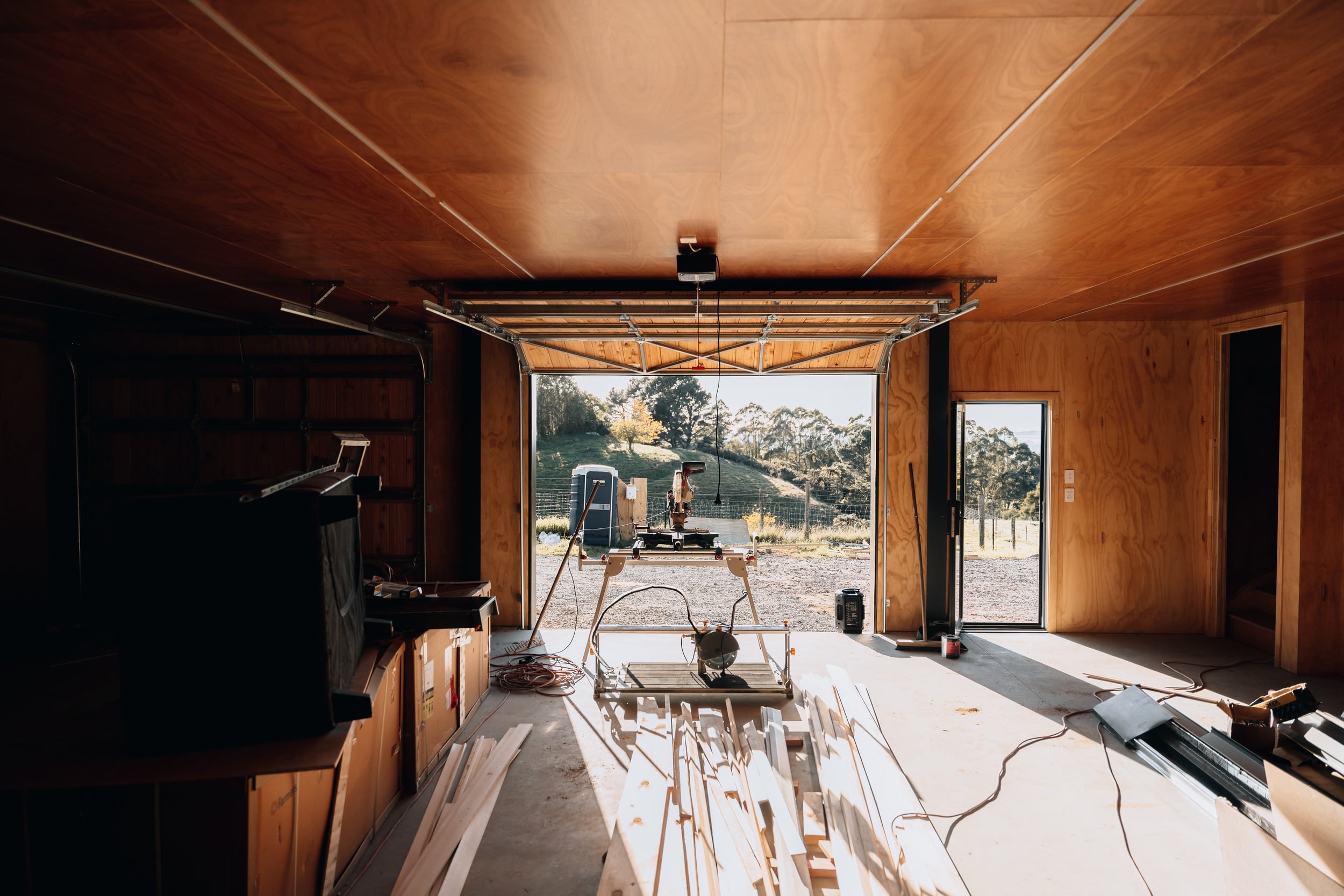
Yes. The most effective way to control costs is to finalise all selections before the slab is poured.
We understand the temptation. You want to see the rooms built before you choose the paint colour. You want to stand in the kitchen before you pick the mixer tap.
This “decide later” mentality causes cost blowouts and delays that cost money.
The Cost of a Change
Once the contract is signed, any change is a “Variation”. Variations cost more than the item itself.
If you change the shower mixer after the plumbing pre-wire is done:
- Admin Fee: We charge for the time to update the order and the plans.
- Restocking Fee: The supplier charges to take the old mixer back.
- Delay Cost: Work stops while we wait for the new mixer. If the plumber leaves the site, we might wait two weeks to get them back.
The Selection Booklet Protocol
We use a specific system to prevent this. We guide you through a comprehensive selection process before construction starts. We document everything in our internal decision booklet.
- Cladding type and colour (e.g., Abodo vs. Brick).
- Roofing profile.
- Flooring for every room.
- Kitchen layout and finishes.
- Plumbing fixtures (taps, toilets, showers).
- Electrical layout (where every power point goes).
When construction starts, we order materials early. We lock in the pricing. We secure the stock. This protects you from price rises and supply chain shortages. It ensures your move-in date remains realistic.
The Diack Homes Difference: How We Protect Your Budget
We build homes, not surprises.
We are a local, family-owned business. Cameron and Zoe Diack run this company with a focus on integrity. We live here. Our kids go to school here. Our reputation is everything. We do not want to be the builder you complain about at a BBQ. We want to be the builder you invite to the BBQ.
We designed our entire process to remove financial stress.
1. The 10-Year Master Build Guarantee
We do not ask you to trust us blindly. We are Registered Master Builders. Every home we build comes with the 10-Year Master Build Guarantee. This is your safety net. It protects your deposit and guarantees the quality of our workmanship. If anything happens to us, or if there is a defect we fail to fix, Master Builders steps in.
2. BuilderTrend Transparency
We use professional project management software called BuilderTrend. You get a login to your own portal on your phone or computer.
- Schedule: You see exactly what happens on site each week. You know when the roof is going on and when the painters are starting.
- Daily Logs: We upload photos and updates. You see progress even if you are at work or overseas.
- Financials: You see a live running total of your contract price. If you request a variation, you approve the price in the app before we do the work. You never receive a surprise invoice at the end of the month.
3. Fixed Price Certainty
We do the hard work upfront. We charge for our Feasibility and Preliminary Agreement because it delivers value. It gives you a contract you can take to the bank with confidence. It ensures that the house we design is the house you can afford to build.
Case Study: A Recent Tauranga Custom Build Breakdown
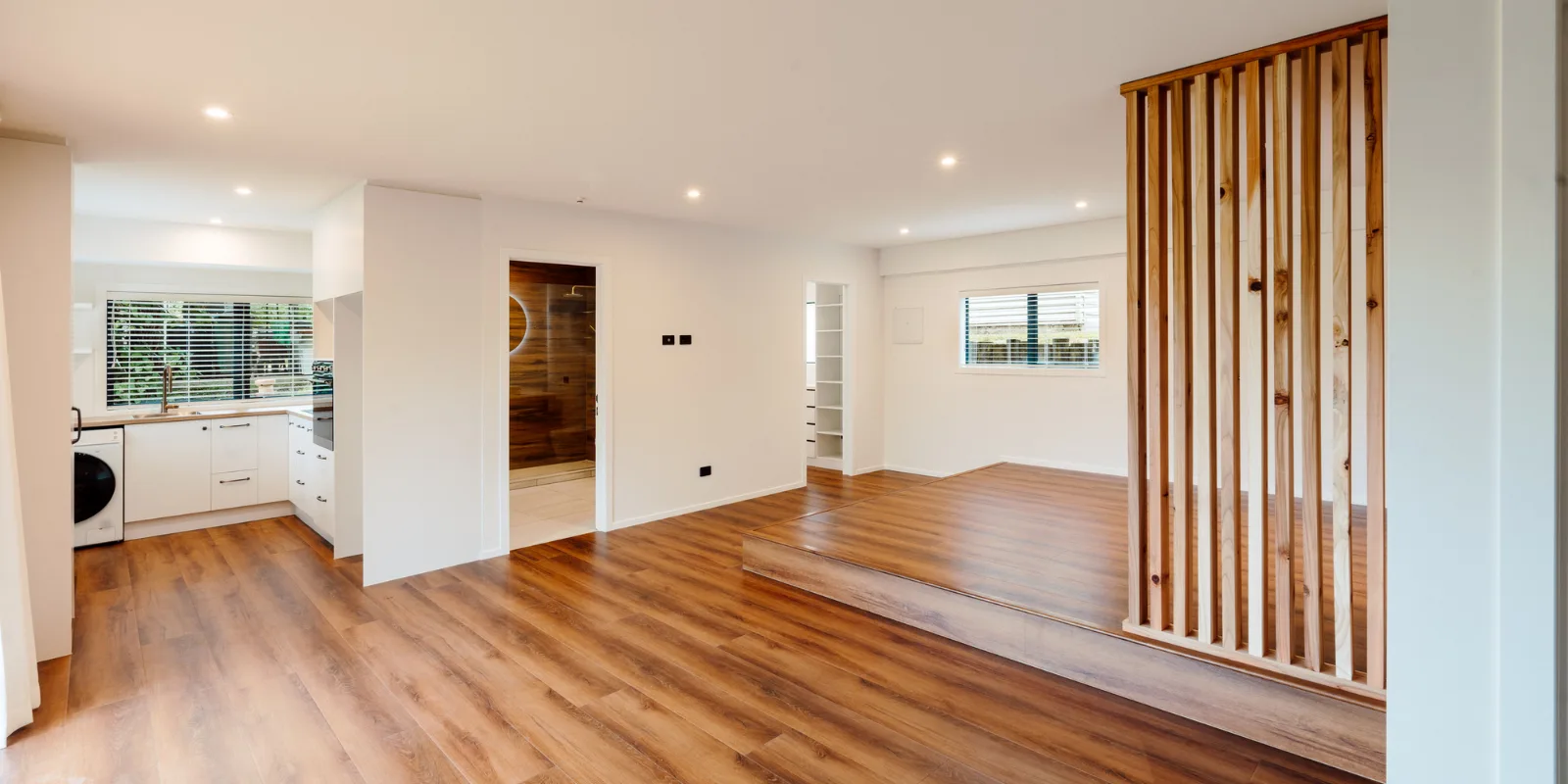
To help you understand where the money goes, here is a breakdown of a typical custom home project we manage in the Bay of Plenty. (You can view our recent projects to see the quality of our finishes.)
Project: Family Lifestyle Home
Location: Pyes Pa / The Lakes area
Size: 240 square metres
Site: Gentle slope requiring retaining walls
The Cost Distribution
Earthworks & Foundations: 15%
This includes site scraping, timber pole retaining walls to manage the slope, and a ribbed raft concrete floor (Pod floor). The slope added roughly 4% to the total build cost compared to a flat site. We identified this early during the site visit, so the client expected it.
Framing & Enclosure: 30%
This is the shell. Timber framing, scissor truss ceilings in the living area (creating that sense of space), Coloursteel roofing, double-glazed aluminium joinery, and cladding. This client chose a mix of painted brick and cedar features.
Interior Fit-out: 25%
This covers insulation, gib lining, plastering, painting, doors, hardware, skirting, and flooring. The client allocated extra budget here for engineered timber flooring in the living areas and tiled showers in the bathrooms.
Systems (Plumbing/Electrical): 15%
This includes the wiring, piping, LED lighting, and gas infinity system. It also covers the Ducted Air Conditioning system, which is a popular choice in Tauranga for humidity control.
Project Management & Margin: 15%
This covers the site management, BuilderTrend access, health and safety compliance, insurance, and our business overheads. This is the cost of having a professional team run the project so you do not have to.
The Lesson
This client engaged us early (ECI). We identified that their initial plan for extensive block retaining walls would blow the budget. We worked with the engineer to redesign the site levels, using timber pole retaining instead. This saved enough money to upgrade the kitchen stone benchtops and install the ducted heating system.
Common Questions About Building Costs in the Bay
How much does a feasibility study cost with Diack Homes?
The cost varies based on the complexity of your project. It is a small fraction of the total build cost. Think of it as insurance against bad planning. The cost of the feasibility study is far less than the cost of a single major variation during the build.
Do you build on sloping sites?
Yes. We specialise in challenging sites in areas like the Kaimais, Welcome Bay, and Omokoroa. However, the slope increases the cost. You need more earthworks, retaining walls, and often engineered foundations. We recommend a site visit before you buy the land.
Can I use my own architect?
Yes. We are happy to work with your architect. We recommend you introduce us during the Concept Design phase. We can provide pricing feedback to ensure the architect’s vision fits your financial limit.
Can I supply my own materials to save money?
Generally, no. We need to guarantee the quality of all materials in your home to meet the Master Builders Association’s Master Build Guarantee and the Consumer Guarantees Act. If you supply a tap and it leaks inside the wall, the liability becomes complicated. We use trusted suppliers who stand behind their products.
How long is my price valid for?
Material prices fluctuate. Once you sign a fixed-price contract, we lock in your pricing for the duration of the build where possible by ordering materials immediately.
The Truth About Your Numbers
Building a custom home is a significant financial commitment. The most expensive mistake you can make isn’t choosing the wrong tile—it is signing a contract based on a guess.
Quick Audit: Are You Ready to Build?
Before you contact a builder, check your readiness:
- Do you own the land? (Or have a specific section under contract?)
- Have you had a site feasibility visit? (To check for slopes, soil, and services?)
- Is your finance pre-approved? (Do you know your true borrowing limit?)
If you answered “Yes” to #1 but “No” to #2, you are at high risk of buying a design you can’t afford to build.
Don’t let a “free quote” turn into a budget nightmare. You deserve to know exactly what your home will cost before you break ground.
Let’s sit down, look at your land, and build a feasibility plan that tells you the truth about your numbers.
Book your Project Feasibility Call with Cameron today.