
You love the location. Perhaps it is the harbour views in Matua, the beach access in the Mount, or the established lifestyle feel of Omokoroa or Te Puna. But the house itself is tired.
You are likely stuck in the classic “Renovate vs. Rebuild” limbo. Your bank is demanding paperwork you do not have. You worry about hiring a builder who goes bust halfway through the project.
You are not alone. Most homeowners in Tauranga spend 6 to 12 months researching before they call a builder. You need to know if the project is financially viable before you fall in love with a design.
In 2026, a full home renovation cost in Tauranga typically sits between $3,000 and $4,500+ per square metre (GST inclusive). This depends on the complexity of structural changes and the quality of finishes.
A “square metre rate” is a blunt tool. It does not account for the state of your existing piles, the specific wind zone of your property, or the Tauranga City Council consent fees required to get the job done legally.
This guide breaks down the real mechanics of renovation costs in the Bay of Plenty. We explain why “free quotes” often lead to rejected home loans and how to avoid the “cowboy” builders who blow your budget.
Last reviewed September 2026. All pricing in this guide has been verified against current Bay of Plenty market rates and reflects what we are quoting on active projects right now. For new build pricing (rather than renovation), see our 2026 guide to custom home costs in Bay of Plenty.
Is it cheaper to renovate or rebuild in Tauranga?
Generally, if structural changes and code compliance upgrades exceed 30–40% of the home’s final value, a knockdown rebuild is often more cost-effective. However, for Tauranga homes with “good bones”—like the classic 1970s timber-framed homes common in Bethlehem and the Avenues, or the solid brick/block homes of Omokoroa—a renovation typically costs 20–25% less than a new build of similar specification.
The decision comes down to the “bones” of the house. You can change a layout. You cannot change the foundation or orientation without massive expense.
The “Save or Scrape” Feasibility Checklist
Before you spend money on an architect, check these factors.
- SAVE IT: The Piles are Solid. If the sub-floor structure is level and dry, you have a massive head start. Re-piling a house eats up budget that gives you zero visual joy.
- SAVE IT: Solar Orientation. The house is already positioned well for the sun (north-facing living areas). Turning a house around to chase the sun is rarely financially viable.
- SAVE IT: Character Features. You have native timber flooring (Rimu/Matai) or unique joinery that would cost a fortune to replicate new. These add “soul” that new builds often lack.
- SCRAPE IT: Low Ceiling Heights. If the stud height is below 2.4 metres, the home will always feel dark and small. No amount of money fixes this structural limitation.
- SCRAPE IT: Compromised Cladding. If the home is from the “leaky building” era (1990s to early 2000s) and requires a full re-clad and re-frame, the cost often eclipses a new build.
Character is the only asset you cannot buy new. If the bones are solid and the location is right, a renovation often yields a better return on investment (ROI) and prevents overcapitalisation better than a rebuild in established Tauranga suburbs.
What is the average cost per square metre for renovations in Tauranga?
Full home renovations in Tauranga typically range from $3,000 to $4,500+ per square metre. This depends on the complexity of the structural work and the level of finish. While a cosmetic refresh costs less, complex structural extensions on hill sites or coastal zones can exceed $5,500 per square metre.
Renovation costs are often higher per square metre than new builds. This is due to the “demolition labour” factor and the complexity of tying new materials into old structures. When we peel back the layers of a 1980s home, we often find wiring that needs upgrading or framing that requires straightening to meet current Building Code standards. This is the nature of renovation.
You can get a quick idea of your specific project costs using our online renovation estimate tool.
Estimated Renovation Cost Ranges (2026)
| Renovation Type | Cost Range (Per Sqm) | What This Typically Includes |
|---|---|---|
| Cosmetic Refresh | $1,500 – $2,500 | Paint, carpet, new kitchen cabinetry (same layout), bathroom update. No structural changes or consent required. |
| Full “Gut” Renovation | $3,000 – $4,200 | New layout (moving walls), re-wiring, re-plumbing, insulation upgrades, double glazing retrofit, new kitchen/baths. |
| Extension / Addition | $3,800 – $5,500+ | New foundation/slab, framing, roofing, and cladding. Higher cost due to tying into the existing structure and weathertightness. |
| Second Story Lift | $5,000 – $7,000+ | Structural engineering, massive demolition, cranage, scaffolding, and full weathertightness risks. |
Note: These are estimated ranges for educational purposes. A specific Fixed Price Contract requires a detailed scope of works.
If your renovation includes a kitchen renovation, expect the kitchen scope alone to sit between $28,000 and $85,000+ depending on layout changes, appliance selections, and benchtop materials.
Why do ‘Hill Sites’ in Tauranga cost more?
If you live in Otumoetai, Welcome Bay, or the Minden, your site topography plays a huge role in cost. A house extension cost in Tauranga hill suburbs is higher due to:
- Access: Can we get a truck to the site? Or do we need to hand-carry materials?
- Earthworks: Does the clay soil require expensive retaining walls?
- Engineering: Hill sites require specific structural engineering that flat Papamoa sites do not.
Why do banks reject ‘Free Quotes’ for renovation loans?
Banks generally require a Fixed Price Contract and a detailed Scope of Works to approve construction lending, not a one-page estimate. Lenders view “free quotes” as high-risk guesses. These often result in budget blowouts which leave the project unfinished and the bank’s security compromised.
We often hear from clients frustrated because their bank will not accept a builder’s quote. The bank is not being difficult. They are protecting their asset. A free quote usually lacks the detail required to value the finished home accurately.
If a builder gives you a price after a 20-minute site visit, they are guessing. A guess is not an asset the bank can lend against.
The Three Levels of Pricing Certainty
- The Ballpark (Free): Good for a chat over coffee to see if you are in the right price bracket. Useless for the bank.
- The Estimate (The “Cowboy” Method): A written guess that excludes hard-to-price items. This often relies on “Provisional Sums” (see below). Banks hate these because the price can change.
- The Preliminary Design & Feasibility Package (The Professional Method): A paid engagement where the builder investigates council files, engineering, and material costs to create a Fixed Price Contract. This is the document banks require to approve your construction loan.
You are not paying for a quote. You are paying for the financial certainty that allows the bank to say “Yes”. Read more about the planning process here.
What are the hidden costs of ‘Cowboy’ builders and self-management?
Self-managing a renovation to “save on builder margins” often ends up costing 15–20% more in the long run. This is due to holding costs, scheduling delays, and re-doing non-compliant work. A “Cowboy” builder often bids low by excluding essential items that appear as surprise invoices later.
Many homeowners think they can project manage the build themselves. In the current Tauranga construction market, that is a dangerous game.
1. The ‘Provisional Sum’ Trap
A “Cowboy” builder wins your business by quoting $20,000 for a kitchen. They know it will cost $35,000. They put the $20,000 in as a “Provisional Sum” (an estimate). When the real bill comes in, you pay the extra $15,000.
This tactic makes their quote look cheaper upfront. But by the end of the project, you have paid far more than the fixed-price builder quoted, and you have suffered the stress of constant arguments over money.
A professional renovation builder in Tauranga does the work upfront. We select your taps, your flooring, and your cladding before the contract is signed, so the price we give you is the price you pay.
2. The Timeline Tax (Holding Costs)
Time is money. If you are renting while you build, or paying a mortgage on an empty house, every week of delay costs you thousands.
- Professional Managed Build: Uses a Gantt chart and BuilderTrend software. The Gib-stopper arrives the day the inspector leaves. Total time: 4 months.
- Self-Managed / Cowboy Build: The plumber does not show up. The liner cannot start. The project drags on. Total time: 8 months.
You might save 10% on margin but spend 15% more on rent and interest payments.
3. Compliance Risk
If a sub-trade cuts corners on waterproofing or flashing tape and the work fails a council inspection, the rework costs are on you. A professional Main Contractor takes liability for every sub-trade on site. As Licensed Building Practitioners (LBP), we sign off on the work, ensuring you get your Code Compliance Certificate (CCC) at the end.
How can I cut renovation costs without hurting resale value?
To reduce renovation costs effectively, use a ‘High-Low’ strategy. Splurge on the thermal shell (insulation, windows, weathertightness) and save on replaceable cosmetic finishes.
You can always upgrade a vanity or curtains in five years. You cannot easily upgrade the insulation inside your walls once the Gib is on.
Where to Splurge vs. Save in Tauranga
SPLURGE: Double Glazing & Joinery
If you live in a coastal zone (Mount Maunganui, Papamoa), salt spray is brutal on cheap materials. High-quality aluminium joinery and Low-E double glazing are non-negotiable for resale value and comfort. This is also a requirement for meeting H1 Energy Efficiency standards.
SPLURGE: The Roof
We often get asked, “Can I just patch the roof to save money?” This is the “cheapest way” mindset. If you are renovating underneath, putting a new ceiling under an old, rusty roof is financial suicide. If the roof fails, it ruins your new renovation.
SAVE: Tiles & Flooring
A $60 per square metre tile often looks just as good as a $150 tile if it is laid by a master tiler. Save money on the material. Do not save money on the labour.
SAVE: Electrical Fittings
Use standard white LED downlights for the 90% of the house that does not matter. Save your budget for one or two “hero” pendant lights over the kitchen island.
How long does a full home renovation take in Tauranga?
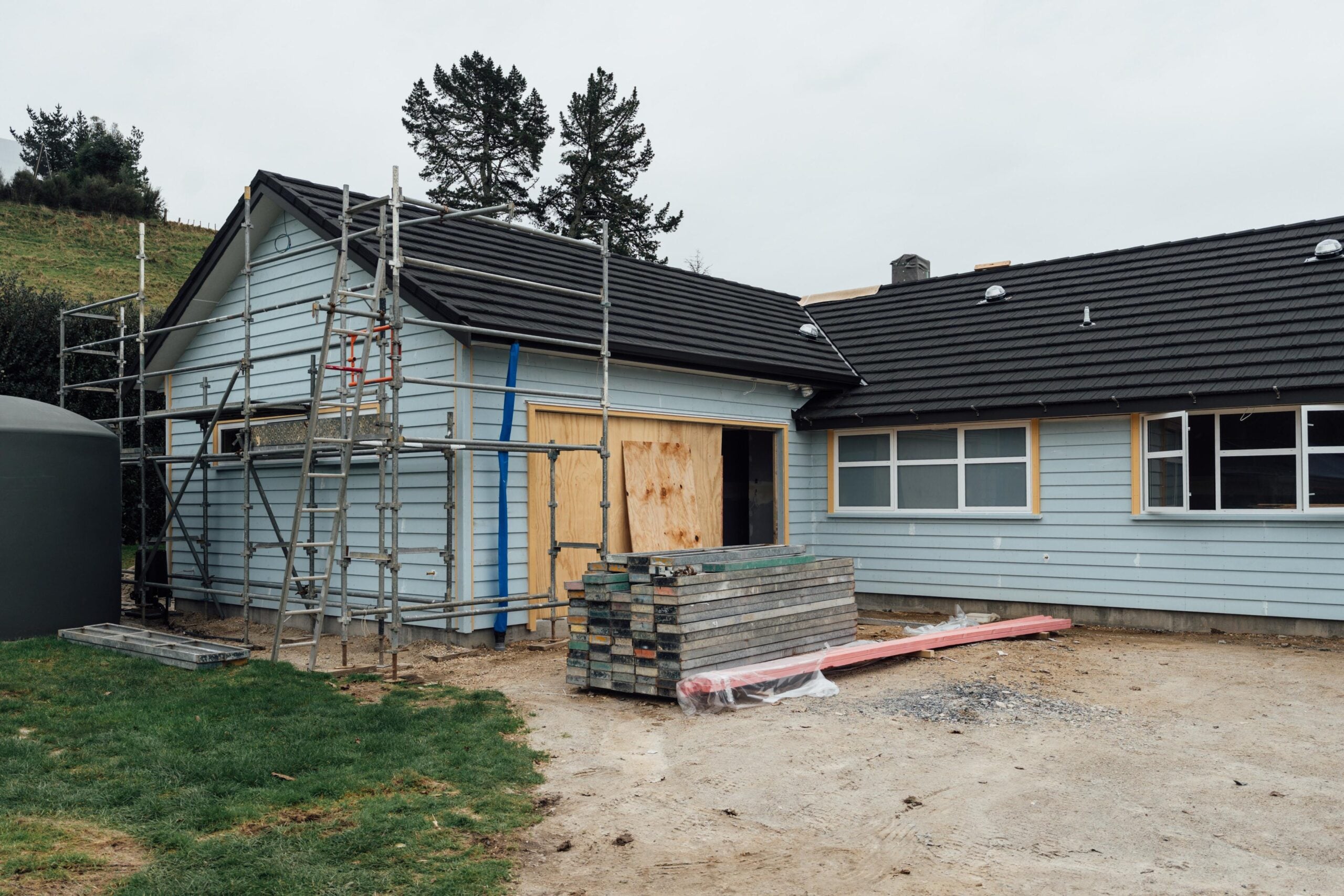
A full “gut” renovation typically takes 4 to 6 months from the start of demolition to practical completion. However, the planning and consenting phase with Tauranga City Council can add an additional 3 to 4 months before construction begins.
- Feasibility & Concept (4 Weeks): We assess the site, the existing structure, and your budget using our Preliminary Design Package.
- Detailed Design & Costing (4–6 Weeks): The architect draws the plans. We price them accurately using detailed scopes of work.
- Tauranga City Council Consent (20 Working Days + Delays): We submit the plans. The council reviews them. In busy periods, or if they ask “Requests for Information” (RFIs), this drags out.
- Construction (16–24 Weeks): Demolition, framing, services, lining, finishing.
Delays often happen during the earthworks phase in winter due to the clay soils common in Tauranga and Omokoroa. We plan around this, but weather is the one variable we cannot control.
Do I need a Building Consent for my renovation?
Most structural renovations require a Building Consent from the Tauranga City Council (TCC). This includes removing load-bearing walls, adding windows, or changing plumbing layouts.
However, “Like-for-like” replacements often do not.
- Exempt Work: Replacing a kitchen in the exact same spot (using the same plumbing waste location). Repainting. Re-carpeting.
- Consent Required: Moving a toilet 2 metres. Removing a wall (even if you think it is not load-bearing). Adding a deck higher than 1.5 metres.
Selling a house with “unconsented works” is becoming impossible in New Zealand. Banks and insurance companies are cracking down. Doing it legally protects your asset. We handle the council paperwork as part of the project management.
Real Project Example: The Renovation ROI (Omokoroa)
Let us look at the math of a typical renovation to see why “doing it right” matters. Take our Omokoroa Reno project as an example of what is possible when you modernise a solid home.
The Scenario: A solid brick/block home in a prime Omokoroa location. Good bones, but the interior was tired, the layout was compartmentalised, and the exterior looked dated.
The Diack Homes Transformation:
Instead of knocking it down, we respected the solid structure but completely overhauled the liveability.
- Structural Changes: We opened up the living spaces to create flow between the kitchen and lounge.
- Custom Joinery: We installed a unique raised timber platform with integrated storage drawers—smart use of space that adds massive “wow factor.”
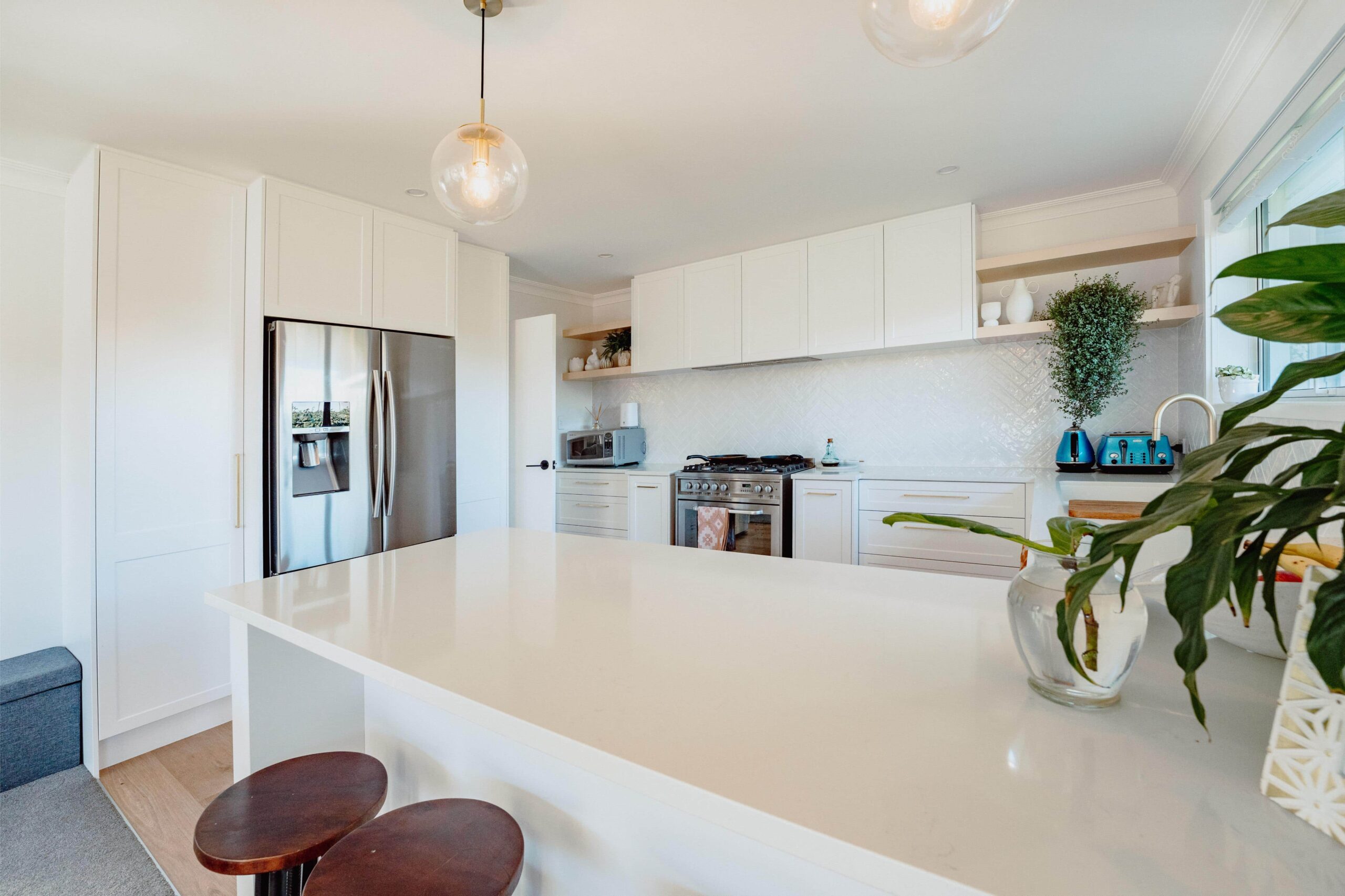
- Modernisation: We installed a high-spec kitchen and bathroom featuring brass fixtures, backlit mirrors, and a vessel sink.
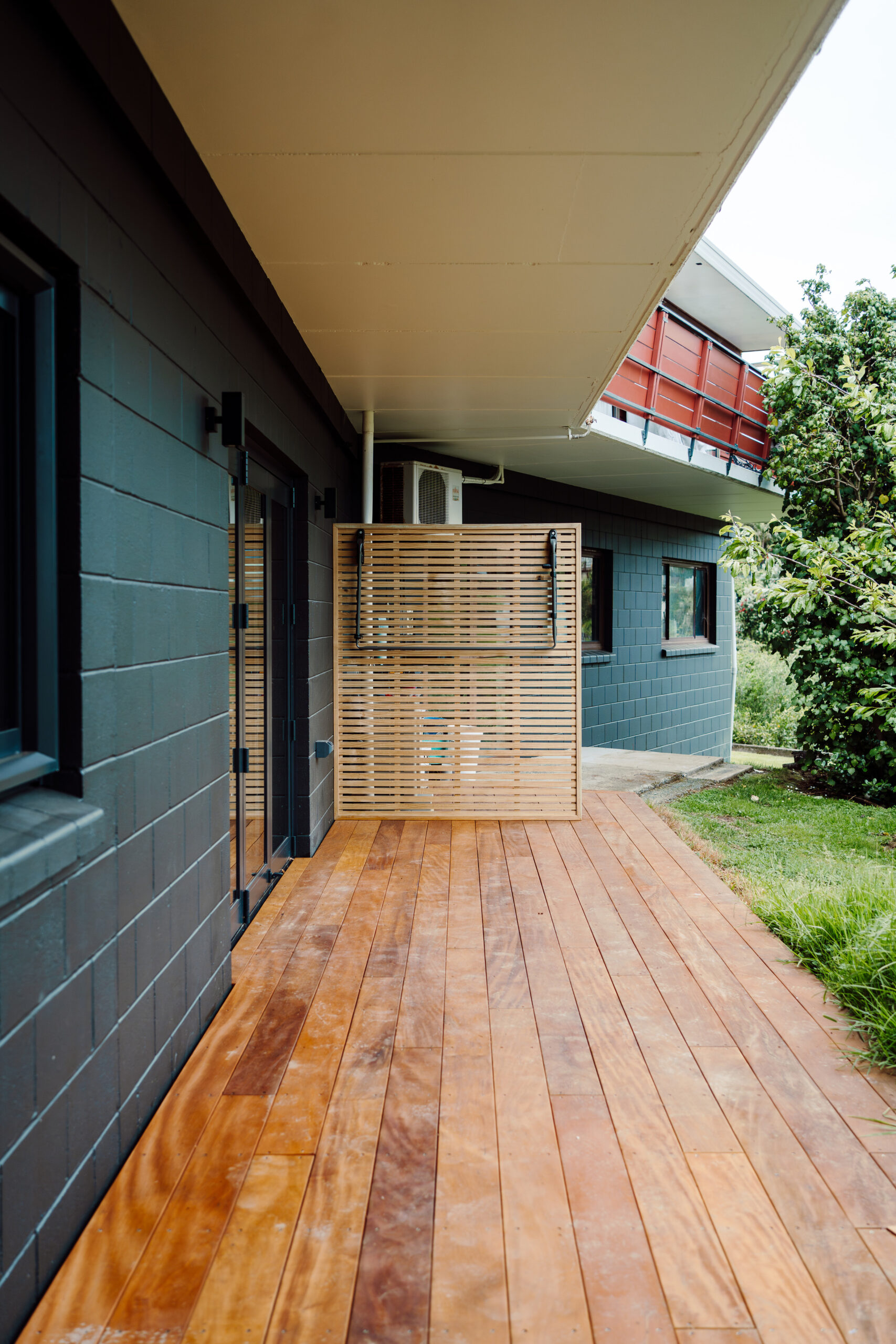
- Exterior: We modernised the dark block exterior and installed new black aluminium joinery to create a contemporary look without the cost of a full rebuild.
The Financial Logic:
By keeping the “bones” but upgrading the thermal shell (windows) and the high-value touchpoints (kitchen/bath), the owners achieved a brand-new lifestyle for significantly less than a new build.
If the client had tried to “save money” by just painting the old bricks and leaving the single-glazing, the valuation would not have moved. Quality renovations create equity. Cheap renovations destroy it.
Why Tauranga Homeowners Choose Diack Homes
We know choosing a builder is scary. You have heard the horror stories.
At Diack Homes, we position ourselves differently. We are not the “cheapest” builder in Tauranga. We do not try to be. We are the safest.
Our focus is on high-value renovations and lifestyle homes across Tauranga, Papamoa, Omokoroa, Te Puke, and Pongokawa. We work with clients who want a “forever home” result, not a quick flip.
Our entire process eliminates the unknowns that cause budget blowouts.
- We Do Not Guess: We use a paid Preliminary Design & Feasibility Package to investigate your property before we sign a contract. This means we find the rot, the pipe issues, and the council snags early. They do not become expensive surprises later.
- Bank-Ready Documentation: We provide the exact level of detail (Scope of Works, Fixed Price) banks require to approve your funding.
- Full Project Management: We do not just hammer nails. We manage the council, the sub-trades, the timeline, and the budget. You get one point of contact and one responsible party.
- The Gold Standard Guarantee: We back our work with the 10-Year Master Build Guarantee, giving you total peace of mind.
We work best with clients who value transparency over a “too good to be true” bottom line. Cameron handles the technical build. Zoe ensures your family is looked after.
Frequently Asked Questions
Can I live in my house during a major renovation?
For full renovations involving bathrooms and kitchens, we strongly recommend moving out. Living on-site increases the build time as trades have to work around you. It creates significant health and safety stress for your family. It is often cheaper to pay rent for 4 months than to drag a build out to 6 months.
What is a Provisional Sum (PC Sum)?
A Provisional Sum is an allowance in the contract for work that cannot be priced exactly yet (e.g., “Kitchen Joinery: $20,000”). If the actual cost is higher, you pay the difference. To avoid budget blowouts, Diack Homes aims to minimise PC sums by selecting materials before signing the contract.
Do you offer a fixed price guarantee?
Yes. Once we complete the Preliminary Design & Feasibility stage and have full engineering and council approval, we provide a Fixed Price Contract. This gives you absolute budget certainty before construction starts.
Will a renovation increase my home’s value enough to justify the cost?
It depends on where the money is spent. Renovations that improve layout, thermal performance, and kitchens or bathrooms usually add value in Tauranga. Cosmetic-only upgrades often feel nice but do little for valuation. Banks and valuers care most about liveability, compliance, and energy efficiency—not surface-level finishes.
Can I stage my renovation to spread the cost over time?
Yes, but only if the project is planned properly from the start. Structural work, services (plumbing and electrical), and consented changes should be done in one stage. You can delay cosmetic items like wardrobes, landscaping, or feature lighting. Poor staging often leads to rework and higher total costs.
How much contingency should I allow for a renovation?
For a professionally scoped, fixed-price renovation, a 5–8% contingency is usually sufficient. If you are working from rough estimates or many Provisional Sums, you may need 15–20%, which is a red flag. Good planning reduces the need for large contingencies.
Stop Guessing. Start Planning.
Renovating your home is likely the second biggest financial transaction of your life. Do not risk it on a “guesstimate” or a builder who relies on hope rather than planning.
If you want to know if your project is feasible, and you need a price your bank can actually lend on, we can help.
Book a Preliminary Consultation with Diack Homes today. Let us look at your plans, discuss your budget, and give you the honest answers you need to move forward with confidence.